
Smart Investing Guide: How to Build Wealth for Beginners
Learn the fundamentals of smart investing and how to build long-term wealth with proven strategies. Perfect for beginners looking to start their investment journey.


Learn the fundamentals of smart investing and how to build long-term wealth with proven strategies. Perfect for beginners looking to start their investment journey.
Explain the concepts of inflation and the power of compound growth. Use a simple chart to show how money in a savings account loses value over time, while invested money grows exponentially.

Bust the myth that all credit cards are evil. Frame them as a tool for building credit, earning rewards, and providing consumer protection—as long as the balance is paid in full every month.

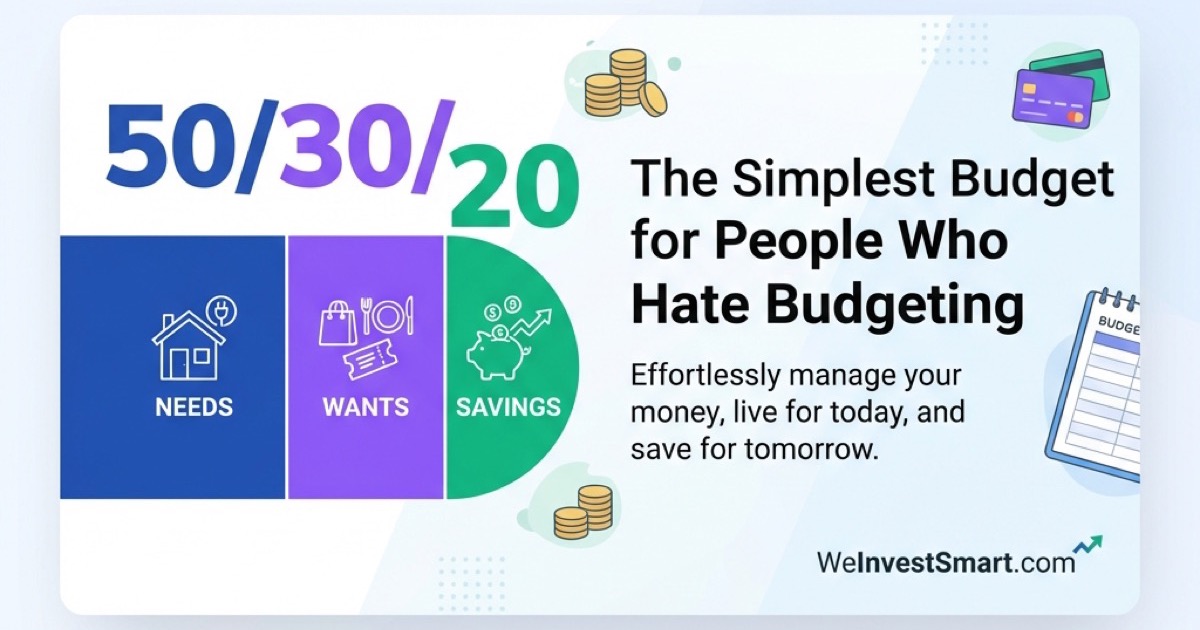
Tired of tracking every penny? Discover the 50/30/20 rule, a simple and powerful framework to manage your money without the hassle of a complicated budget.

A budget is useless if your mindset is broken. Discover the 5 core psychological shifts you must make—from scarcity to abundance—before you even think about a spreadsheet.

A practical, challenge-oriented guide with actionable tips for quickly saving a starter emergency fund. This gives beginners a quick, tangible win and a buffer against unexpected costs.

Stop trying to time the market. Discover Dollar-Cost Averaging (DCA), the simple, automated strategy of investing a fixed amount regularly. Learn how it reduces risk, lowers your average cost, and removes emotion from investing.

Move beyond the 9-to-5. Brainstorm and categorize different types of income streams: active (freelancing, side hustles), passive (dividends, real estate), and portfolio-based. Provide actionable first steps for each.

Confused by investing? This guide demystifies target-date funds, the revolutionary "set it and forget it" tool that automatically manages your risk as you approach retirement, making it ideal for beginners.

Apply the SMART framework (Specific, Measurable, Achievable, Relevant, Time-bound) to personal finance goals. Instead of "save more," guide them to create a goal like "Save $5,000 for a house down payment by December 31st."